Friday, 20 November 2009

Buddhist Morality and the Two Standpoints

Buddhism presents us with a particular orientation in the world. Another word for this broad sense of orientation in the world is cosmology. It seems that what unites Buddhist throughout history and geography is this shared cosmology: a cosmology in which we find “an ethically oriented “samsaric” cosmology coexist[ing] with an ethically oriented “Buddhic” cosmos brought into being by the achievements and teachings of the Gautama Buddha.” (1)

What that means is that the Buddhist, starting with the historical Buddha himself 2500 years ago, sees the cosmos from two standpoints (to borrow Kantian language). The first standpoint is normal everyday life, dominated by the eight worldly conditions (aṭṭha lokadhammā): gain and loss, fame and disrepute, praise and blame, pleasure and pain. But the Buddha elucidated (we could say introduced but that would be incorrect) a path to freedom from all of these, or at least freedom from the “hedonic treadmill” of craving that goes with the former and the mental anguish that tends to accompany the latter.

This “Buddhic” or awakened standpoint is said to be one of perfect mental clarity, understanding of the “true nature” of all things and thus freedom from getting upset with life’s natural ebb and flow. The Buddha and his awakened followers, the arahats, still ate, slept, and had illnesses and died. Yet the difference between them and the unawakened has often been described both in terms of what they lacked, (greed, hatred, delusion) and what they had in terms of simple awareness along the lines of: “when they ate they were aware of themselves eating, when they walked they were aware of themselves walking, when they felt pain they were aware of feeling pain.”

Thus we find the two very different standpoints within Buddhism. Scholars who accuse Buddhism of being overly pessimistic and world or life-denying tend to look only at the former, “samsaric” perspective,(2) and those who find Buddhism to be overly dry and detached have probably only been exposed to the latter, “Buddhic” perspective.(3) A subtle example of the supposed tension between the two perspectives is found in a recent work by Donald Swearer. We begin with the canonical account of the Buddha just after his awakening: (4)
Enough with teaching the Dharma [this is the Buddha thinking to himself]
That even I found hard to reach;
For it will never be perceived
By those who live in lust and hate.

Those dyed in lust, wrapped in darkness
Will never discern this abstruse Dharma
Which goes against the worldly stream,
Subtle, deep, and difficult to see.
"Fortunately," writes Swearer, "Brahma Sahampati intercedes on behalf of the world by pleading with the Buddha: "The world will be lost, the world will perish, since the mind of the Tathagata, accomplished and fully enlightened, inclines to inaction rather than teaching the Dharma." Upon hearing Brahma's plea, the Blessed One "out of compassion for all beings surveyed the world with the eye of a Buddha" and decided to teach the supreme truth he had attained in his enlightenment."

Swearer concludes that, "The story demonstrates that although priority is given to the wisdom of enlightenment, the most complete expression of Buddhahood includes the compassion that motivates the Buddha to teach the dharma to a suffering humanity."

Swearer’s reading of wisdom having priority over compassion, while common, is both outdated and problematic. For instance it raises the obvious question, “did the Buddha not have compassion before his chat with Sahampati?” In his discussion of this question, Damien Keown (1992, The Nature of Buddhist Ethics, pp.72-76) finds that, "The Buddha's moral concern was not a consequence of his enlightenment: it preceded it and, indeed, motivated it." (p.73). This conclusion is supported by Aronson in Love and Sympathy in Theravada Buddhism and argued against by Jones, "Theravada Buddhism and Morality" (JAAR 1979).

While still a matter of some dispute, further analysis of the Buddha’s awakening suggest that these two aspects must be fully realized (in fact, complete wisdom is none other than compassion and vice versa), and that textual preference of one over another was likely for pedagogical reasons. This particular instance was likely one of many cases in which aspects of the existing Brahmanic worldview were turned in service of a new Buddhist supremacy. We could go into further depth with the usefulness and difficulties of these analyses, but for the sake of time we will now simply look at a discourse from the Pāli Canon that brings wisdom and compassion as well as ethics and meditation together into a single sphere. (the Karaniya Metta Sutta)

1. Cosmology, Frank E. Reynolds & Jonathan W. Schofer in Blackwell Companion to Religious Ethics, (2005), p.121.

2. For instance as early as F. Max Müller, see Sully, James (1891) Pessimism: A History and A Criticism, pp.37-38.

3. Famously, Pope John Paul II stated in 1994’s Crossing the Threshold of Hope that Buddhism “in large measure an ‘atheistic’ system’.” He seemed to undercut constructive Catholic-Buddhist dialogue by further pointing out that the ultimate end of man for Christians is union with God, while for Buddhists it is Nirvana (complete detachment, or a state of nothingness).

4. Swearer, “Gautama the Buddha through Christian Eyes: Buddha Loves Me! This I Know, for the Dharma Tells Me So” (BCS 19.1, 1999)

Thursday, 12 November 2009

Buddhism and Ecology - Dr. Brook Ziporyn

(from the video page):

A leading scholar in Tiantai (Tendai) Buddhism will clarify the true nature of reality in relation to environmental concerns and the relevance of Buddhist practice for today.

Lecturer: Dr. Brook Ziporyn
Associate Professor, Department of Religion, Northwestern University

He specializes in Chinese Buddhism, Taoism and Confucianism. He earned the Ph. D in Chinese philosophy at the University of Michigan and has taught Buddhism and Chinese thought at the University of Michigan, Harvard University, the Chung-hwa Institute of Buddhist Studies,Taiwan, and Northwestern University (since 1998).


An interesting journey through both Theravadin and Mahayana sources for a Buddhist Ecology, as well as the difficulties with such a concept (there is no Buddhist word for ecology, for instance). Each of the stories he tells should be ready at hand for students of Buddhism interested in dealing with our ecological crises. Highly recommended.

Tuesday, 3 November 2009

Clifford Geertz on Religion: GREAT QUOTE

"what a given religion is-its specific content-is embodied in the images and metaphors its adherents use to characterize reality."
Clifford Geertz, Islam Observed: Religious Development in Morocco and Indonesia
(New Haven, Conn.: Yale University Press, 1968), pp. 2-3.

Friday, 23 October 2009

Gradual Path

From the Buddhist Dictionary:

Gradual development of the Eightfold Path in the: In many suttas occurs an identical passage that outlines the gradual course of development in the progress of the disciple. There it is shown how this development takes place gradually, and in conformity with laws, from the very first hearing of the doctrine, and from germinating faith and dim comprehension, up to the final realization of deliverance.

"After hearing the law, he is filled with confidence, and he thinks: 'Full of hindrances is household life, a refuse heap; but the homeless life (of a monk) is like the open air. Not easy is it, when one lives at home, to fulfill in all points the rules of the holy life. How if now I were to cut off hair and beard, put on the yellow robe, and go forth from home to the homeless life?' And after a short time, having given up his possessions, great or little, having forsaken a circle of relations, small or large, he cuts off hair and beard, puts on the yellow robe, and goes forth from home to the homeless life.

Having thus left the world, he fulfills the rules of the monks. He avoids the killing of living beings and abstains from it; without stick or sword, conscientious, full of sympathy, he is desirous of the welfare of all living beings. He avoids stealing ... avoids unchastity ... avoids lying ... tale-bearing ... harsh language ... vain talk.

"He abstains from destroying vegetal germs and plants; eats only at one time of the day; keeps aloof from dance, song, music and the visiting of shows; rejects floral adornment, perfumes, ointment, as well as any other kind of adornment and embellishment. High and gorgeous beds he does not use. Gold and silver he does not accept ... keeps aloof from buying and selling things ....

"He contents himself with the robe that protects his body, and with the alms-bowl with which he keeps himself alive. Wherever he goes, he is provided with these two things, just as a winged bird in flying carries its wings along with him.

"By fulfilling this noble domain of morality (sīla) he feels in his heart an irreproachable happiness."

In what follows thereafter it is shown how the disciple watches over his 5 senses and his mind, and by this noble restraint of the senses (indriya-samvara) feels in his heart an unblemished happiness; how in all his actions he is ever mindful and clearly conscious; and how, being equipped with this lofty morality (sīla), and with this noble restraint of the senses (indriya-samvara), and with mindfulness and clear consciousness (sati-sampajañña), he choses a secluded dwelling, and freeing his mind from the 5 hindrances (nīvarana, q.v.) he reaches full concentration (samādhi, q.v.); and how thereafter, by developing insight (vipassanā q.v.) with regard to the impermanency (anicca), misery (dukkha) and impersonality (anattā, q.v.) of all phenomena of existence, he finally realizes deliverance from all cankers and defilements, and thus the assurance arises in him:

  • "For ever am I liberated,

  • This is the last time I am born,

  • No new existence waits for me."

Cf. D.1, 2f; M. 27, 38, 51, 60, 76; A. IV, 198; X, 99: Pug. 239, etc.

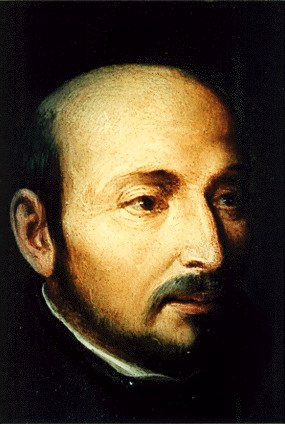
Ignatian Spiritual Exercises

This is a bit off topic from Buddhist Ethics, but interestingly similar... Plus I'm working on a conference paper now comparing these with the Metta-Bhavana (Cultivation of loving-kindness).

Here are some resources I'm working from:

Some Wikipedia stuff (used for general information, not as a source!)
And a couple more:
I'm also using David L. Fleming, SJ's book, "What is Ignatian Spirituality"- available online for free by following that link. Guidance in my writing and research has come from my friend and occasional spiritual advisor, Larry, who himself is a lay Jesuit spiritual director (meaning that he leads people through the Spiritual Exercises). And lastly I have a couple dull historical texts. I'm hoping to get a copy of the original Spiritual Exercises in Spanish, but time and the fact that me Español es mierda may prevent much coming from that endeavor.

For those interested in looking at parallels between this and Buddhist practice, a good place to start is the examen:

This is a version of the five-step Daily Examen that St. Ignatius practiced.

1. Become aware of God’s presence.

2. Review the day with gratitude.

3. Pay attention to your emotions.

4. Choose one feature of the day and pray from it.

5. Look toward tomorrow.

For details about each step of the Examen, read How Can I Pray?

Thursday, 15 October 2009

Ethics as a Path

I am coming to the conclusion, or at least having the thought, that ethics must be about a path. Now, this is wrong immediately if we consider forms of ethics that at least seem to have nothing to do with a path or pathiness (to throw in a random neologism).

Prima facia
Mill's Utilitarianism doesn't seem to be about a path, more of a set of reasonable guidelines for the individual to follow to live in an orderly society. Aristotle's is path-like. Kant's doesn't seem to be (but can be construed as such - and I'll do just that). Buddhism is probably the most obviously path-based. Scanning Rupert Gethin's book, "The Buddhist Path to Awakening" we get a quick set of reasons for understanding early Buddhism as a path:
In their own terms, the Nikāyas teach but two things: dukkha and the cessation of dukkha. In other words, they postulate a situation where there is a problem and a solution where there is no longer a problem, and are concerned with the processes and means involved in passing from the former to the latter. If this is the Nikāyas' ultimate concern then everything in them might be viewed as at least intended to be subordinate to that aim....

In other words we might say that Buddhist thought is about the Buddhist path -- a path that is seen as leading gradually away from dukkha towards its cessation, and as culminating in the awakening from a restless and troubled sleep. (p.18)
And he goes on, discussing the western scholarly attraction to philosophical concepts in early Buddhism:
The point is that in Buddhist thought discussion of paṭicca-samuppāda, anattā, and nibbāna is not pursued as an end in itself but subordinated to the notion of the spiritual path, which is hardly true of the discussion of causality, change and metaphysics in western thought. (p.19)
Some food for thought...

Monday, 12 October 2009

Sutta on Protection, Pali and English

Maha-mangala Sutta: Protection
translated from the Pali by
Thanissaro Bhikkhu

(with Pāli from here)

4. Maṅgalasuttaṃ

Evaṃ me sutaṃ – ekaṃ samayaṃ bhagavā sāvatthiyaṃ viharati jetavane anāthapiṇḍikassa ārāme. Atha kho aññatarā devatā abhikkantāya rattiyā abhikkantavaṇṇā kevalakappaṃ jetavanaṃ obhāsetvā yena bhagavā tenupasaṅkami; upasaṅkamitvā bhagavantaṃ abhivādetvā ekamantaṃ aṭṭhāsi. Ekamantaṃ ṭhitā kho sā devatā bhagavantaṃ gāthāya ajjhabhāsi –

I have heard that at one time the Blessed One was staying in Savatthi at Jeta's Grove, Anathapindika's monastery. Then a certain deva, in the far extreme of the night, her extreme radiance lighting up the entirety of Jeta's Grove, approached the Blessed One. On approaching, having bowed down to the Blessed One, she stood to one side. As she stood to one side, she addressed him with a verse.

261.

‘‘Bahū devā manussā ca, maṅgalāni acintayuṃ;

Ākaṅkhamānā sotthānaṃ, brūhi maṅgalamuttamaṃ’’.

Many devas and human beings give thought to protection, desiring well-being. Tell, then, the highest protection.

262.

‘‘Asevanā ca bālānaṃ, paṇḍitānañca sevanā;

Pūjā ca pūjaneyyānaṃ [pūjanīyānaṃ (sī. syā. kaṃ. pī.)], etaṃ maṅgalamuttamaṃ.

The Buddha: Not consorting with fools, consorting with the wise, paying homage to those worthy of homage: This is the highest protection.

263.

‘‘Patirūpadesavāso ca, pubbe ca katapuññatā;

Attasammāpaṇidhi [attasammāpaṇīdhī (katthaci)] ca, etaṃ maṅgalamuttamaṃ.

Living in a civilized land, having made merit in the past, directing oneself rightly: This is the highest protection.

264.

‘‘Bāhusaccañca sippañca, vinayo ca susikkhito;

Subhāsitā ca yā vācā, etaṃ maṅgalamuttamaṃ.

Broad knowledge, skill, well-mastered discipline, well-spoken words: This is the highest protection.

265.

‘‘Mātāpitu upaṭṭhānaṃ, puttadārassa saṅgaho;

Anākulā ca kammantā, etaṃ maṅgalamuttamaṃ.

Support for one's parents, assistance to one's wife and children, consistency in one's work: This is the highest protection.

266.

‘‘Dānañca dhammacariyā ca, ñātakānañca saṅgaho;

Anavajjāni kammāni, etaṃ maṅgalamuttamaṃ.

Giving, living in rectitude, assistance to one's relatives, deeds that are blameless: This is the highest protection.

267.

‘‘Āratī viratī pāpā, majjapānā ca saṃyamo;

Appamādo ca dhammesu, etaṃ maṅgalamuttamaṃ.

Avoiding, abstaining from evil; refraining from intoxicants, being heedful of the qualities of the mind: This is the highest protection.

268.

‘‘Gāravo ca nivāto ca, santuṭṭhi ca kataññutā;

Kālena dhammassavanaṃ [dhammasavaṇaṃ (katthaci), dhammasavanaṃ (sī. ka.)], etaṃ maṅgalamuttamaṃ.

Respect, humility, contentment, gratitude, hearing the Dhamma on timely occasions: This is the highest protection.

269.

‘‘Khantī ca sovacassatā, samaṇānañca dassanaṃ;

Kālena dhammasākacchā, etaṃ maṅgalamuttamaṃ.

Patience, compliance, seeing contemplatives, discussing the Dhamma on timely occasions: This is the highest protection.

270.

‘‘Tapo ca brahmacariyañca, ariyasaccāna dassanaṃ;

Nibbānasacchikiriyā ca, etaṃ maṅgalamuttamaṃ.

Austerity, celibacy, seeing the Noble Truths, realizing Unbinding: This is the highest protection.

271.

‘‘Phuṭṭhassa lokadhammehi, cittaṃ yassa na kampati;

Asokaṃ virajaṃ khemaṃ, etaṃ maṅgalamuttamaṃ.

A mind that, when touched by the ways of the world, is unshaken, sorrowless, dustless, at rest: This is the highest protection.

272.

‘‘Etādisāni katvāna, sabbatthamaparājitā;

Sabbattha sotthiṃ gacchanti, taṃ tesaṃ maṅgalamuttama’’nti.

Maṅgalasuttaṃ catutthaṃ niṭṭhitaṃ.

Everywhere undefeated when acting in this way, people go everywhere in well-being: This is their highest protection.

"The Khuddakapatha" (Khp 1-9), translated from the Pali by Thanissaro Bhikkhu. Access to Insight, June 7, 2009, http://www.accesstoinsight.org/tipitaka/kn/khp/khp.1-9.than.html.