(from the video page):
A leading scholar in Tiantai (Tendai) Buddhism will clarify the true nature of reality in relation to environmental concerns and the relevance of Buddhist practice for today.
Lecturer: Dr. Brook Ziporyn
Associate Professor, Department of Religion, Northwestern University
He specializes in Chinese Buddhism, Taoism and Confucianism. He earned the Ph. D in Chinese philosophy at the University of Michigan and has taught Buddhism and Chinese thought at the University of Michigan, Harvard University, the Chung-hwa Institute of Buddhist Studies,Taiwan, and Northwestern University (since 1998).
An interesting journey through both Theravadin and Mahayana sources for a Buddhist Ecology, as well as the difficulties with such a concept (there is no Buddhist word for ecology, for instance). Each of the stories he tells should be ready at hand for students of Buddhism interested in dealing with our ecological crises. Highly recommended.
Thursday, 12 November 2009


Tuesday, 3 November 2009
Clifford Geertz on Religion: GREAT QUOTE
"what a given religion is-its specific content-is embodied in the images and metaphors its adherents use to characterize reality."Clifford Geertz, Islam Observed: Religious Development in Morocco and Indonesia
(New Haven, Conn.: Yale University Press, 1968), pp. 2-3.
Friday, 23 October 2009
Gradual Path
From the Buddhist Dictionary:
Gradual development of the Eightfold Path in the: In many suttas occurs an identical passage that outlines the gradual course of development in the progress of the disciple. There it is shown how this development takes place gradually, and in conformity with laws, from the very first hearing of the doctrine, and from germinating faith and dim comprehension, up to the final realization of deliverance.
"After hearing the law, he is filled with confidence, and he thinks: 'Full of hindrances is household life, a refuse heap; but the homeless life (of a monk) is like the open air. Not easy is it, when one lives at home, to fulfill in all points the rules of the holy life. How if now I were to cut off hair and beard, put on the yellow robe, and go forth from home to the homeless life?' And after a short time, having given up his possessions, great or little, having forsaken a circle of relations, small or large, he cuts off hair and beard, puts on the yellow robe, and goes forth from home to the homeless life.
Having thus left the world, he fulfills the rules of the monks. He avoids the killing of living beings and abstains from it; without stick or sword, conscientious, full of sympathy, he is desirous of the welfare of all living beings. He avoids stealing ... avoids unchastity ... avoids lying ... tale-bearing ... harsh language ... vain talk.
"He abstains from destroying vegetal germs and plants; eats only at one time of the day; keeps aloof from dance, song, music and the visiting of shows; rejects floral adornment, perfumes, ointment, as well as any other kind of adornment and embellishment. High and gorgeous beds he does not use. Gold and silver he does not accept ... keeps aloof from buying and selling things ....
"He contents himself with the robe that protects his body, and with the alms-bowl with which he keeps himself alive. Wherever he goes, he is provided with these two things, just as a winged bird in flying carries its wings along with him.
"By fulfilling this noble domain of morality (sīla) he feels in his heart an irreproachable happiness."
In what follows thereafter it is shown how the disciple watches over his 5 senses and his mind, and by this noble restraint of the senses (indriya-samvara) feels in his heart an unblemished happiness; how in all his actions he is ever mindful and clearly conscious; and how, being equipped with this lofty morality (sīla), and with this noble restraint of the senses (indriya-samvara), and with mindfulness and clear consciousness (sati-sampajañña), he choses a secluded dwelling, and freeing his mind from the 5 hindrances (nīvarana, q.v.) he reaches full concentration (samādhi, q.v.); and how thereafter, by developing insight (vipassanā q.v.) with regard to the impermanency (anicca), misery (dukkha) and impersonality (anattā, q.v.) of all phenomena of existence, he finally realizes deliverance from all cankers and defilements, and thus the assurance arises in him:
"For ever am I liberated,
This is the last time I am born,
No new existence waits for me."
Cf. D.1, 2f; M. 27, 38, 51, 60, 76; A. IV, 198; X, 99: Pug. 239, etc.
Ignatian Spiritual Exercises
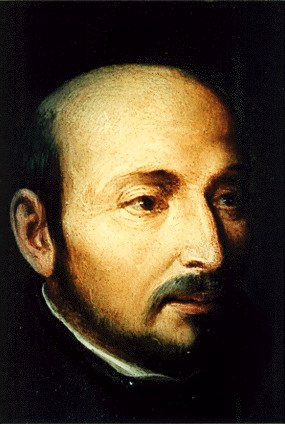 This is a bit off topic from Buddhist Ethics, but interestingly similar... Plus I'm working on a conference paper now comparing these with the Metta-Bhavana (Cultivation of loving-kindness).
Here are some resources I'm working from:
- A breakdown of the practices by week/day.
- The entire text in its 1914 translation on sacred-texts.
- A very brief introduction at Loyola Press.
- http://ignatianspirituality.com/
And a couple more:
I'm also using David L. Fleming, SJ's book, "What is Ignatian Spirituality"- available online for free by following that link. Guidance in my writing and research has come from my friend and occasional spiritual advisor, Larry, who himself is a lay Jesuit spiritual director (meaning that he leads people through the Spiritual Exercises). And lastly I have a couple dull historical texts. I'm hoping to get a copy of the original Spiritual Exercises in Spanish, but time and the fact that me Español es mierda may prevent much coming from that endeavor.
For those interested in looking at parallels between this and Buddhist practice, a good place to start is the examen:
This is a version of the five-step Daily Examen that St. Ignatius practiced.
1. Become aware of God’s presence.
2. Review the day with gratitude.
3. Pay attention to your emotions.
4. Choose one feature of the day and pray from it.
5. Look toward tomorrow.
For details about each step of the Examen, read How Can I Pray?
Thursday, 15 October 2009
Ethics as a Path
I am coming to the conclusion, or at least having the thought, that ethics must be about a path. Now, this is wrong immediately if we consider forms of ethics that at least seem to have nothing to do with a path or pathiness (to throw in a random neologism).
Prima facia Mill's Utilitarianism doesn't seem to be about a path, more of a set of reasonable guidelines for the individual to follow to live in an orderly society. Aristotle's is path-like. Kant's doesn't seem to be (but can be construed as such - and I'll do just that). Buddhism is probably the most obviously path-based. Scanning Rupert Gethin's book, "The Buddhist Path to Awakening" we get a quick set of reasons for understanding early Buddhism as a path:
Prima facia Mill's Utilitarianism doesn't seem to be about a path, more of a set of reasonable guidelines for the individual to follow to live in an orderly society. Aristotle's is path-like. Kant's doesn't seem to be (but can be construed as such - and I'll do just that). Buddhism is probably the most obviously path-based. Scanning Rupert Gethin's book, "The Buddhist Path to Awakening" we get a quick set of reasons for understanding early Buddhism as a path:
In their own terms, the Nikāyas teach but two things: dukkha and the cessation of dukkha. In other words, they postulate a situation where there is a problem and a solution where there is no longer a problem, and are concerned with the processes and means involved in passing from the former to the latter. If this is the Nikāyas' ultimate concern then everything in them might be viewed as at least intended to be subordinate to that aim....And he goes on, discussing the western scholarly attraction to philosophical concepts in early Buddhism:
In other words we might say that Buddhist thought is about the Buddhist path -- a path that is seen as leading gradually away from dukkha towards its cessation, and as culminating in the awakening from a restless and troubled sleep. (p.18)
The point is that in Buddhist thought discussion of paṭicca-samuppāda, anattā, and nibbāna is not pursued as an end in itself but subordinated to the notion of the spiritual path, which is hardly true of the discussion of causality, change and metaphysics in western thought. (p.19)Some food for thought...
Monday, 12 October 2009
Sutta on Protection, Pali and English
Maha-mangala Sutta: Protection
translated from the Pali by
Thanissaro Bhikkhu
(with Pāli from here)
4. Maṅgalasuttaṃ
Evaṃ me sutaṃ – ekaṃ samayaṃ bhagavā sāvatthiyaṃ viharati jetavane anāthapiṇḍikassa ārāme. Atha kho aññatarā devatā abhikkantāya rattiyā abhikkantavaṇṇā kevalakappaṃ jetavanaṃ obhāsetvā yena bhagavā tenupasaṅkami; upasaṅkamitvā bhagavantaṃ abhivādetvā ekamantaṃ aṭṭhāsi. Ekamantaṃ ṭhitā kho sā devatā bhagavantaṃ gāthāya ajjhabhāsi –
I have heard that at one time the Blessed One was staying in Savatthi at Jeta's Grove, Anathapindika's monastery. Then a certain deva, in the far extreme of the night, her extreme radiance lighting up the entirety of Jeta's Grove, approached the Blessed One. On approaching, having bowed down to the Blessed One, she stood to one side. As she stood to one side, she addressed him with a verse.
261.
‘‘Bahū devā manussā ca, maṅgalāni acintayuṃ;
Ākaṅkhamānā sotthānaṃ, brūhi maṅgalamuttamaṃ’’.
Many devas and human beings give thought to protection, desiring well-being. Tell, then, the highest protection.
262.
‘‘Asevanā ca bālānaṃ, paṇḍitānañca sevanā;
Pūjā ca pūjaneyyānaṃ [pūjanīyānaṃ (sī. syā. kaṃ. pī.)], etaṃ maṅgalamuttamaṃ.
The Buddha: Not consorting with fools, consorting with the wise, paying homage to those worthy of homage: This is the highest protection.
263.
‘‘Patirūpadesavāso ca, pubbe ca katapuññatā;
Attasammāpaṇidhi [attasammāpaṇīdhī (katthaci)] ca, etaṃ maṅgalamuttamaṃ.
Living in a civilized land, having made merit in the past, directing oneself rightly: This is the highest protection.
264.
‘‘Bāhusaccañca sippañca, vinayo ca susikkhito;
Subhāsitā ca yā vācā, etaṃ maṅgalamuttamaṃ.
Broad knowledge, skill, well-mastered discipline, well-spoken words: This is the highest protection.
265.
‘‘Mātāpitu upaṭṭhānaṃ, puttadārassa saṅgaho;
Support for one's parents, assistance to one's wife and children, consistency in one's work: This is the highest protection.
266.
‘‘Dānañca dhammacariyā ca, ñātakānañca saṅgaho;
Anavajjāni kammāni, etaṃ maṅgalamuttamaṃ.
Giving, living in rectitude, assistance to one's relatives, deeds that are blameless: This is the highest protection.
267.
‘‘Āratī viratī pāpā, majjapānā ca saṃyamo;
Appamādo ca dhammesu, etaṃ maṅgalamuttamaṃ.
Avoiding, abstaining from evil; refraining from intoxicants, being heedful of the qualities of the mind: This is the highest protection.
268.
‘‘Gāravo ca nivāto ca, santuṭṭhi ca kataññutā;
Kālena dhammassavanaṃ [dhammasavaṇaṃ (katthaci), dhammasavanaṃ (sī. ka.)], etaṃ maṅgalamuttamaṃ.
Respect, humility, contentment, gratitude, hearing the Dhamma on timely occasions: This is the highest protection.
269.
‘‘Khantī ca sovacassatā, samaṇānañca dassanaṃ;
Kālena dhammasākacchā, etaṃ maṅgalamuttamaṃ.
Patience, compliance, seeing contemplatives, discussing the Dhamma on timely occasions: This is the highest protection.
270.
‘‘Tapo ca brahmacariyañca, ariyasaccāna dassanaṃ;
Nibbānasacchikiriyā ca, etaṃ maṅgalamuttamaṃ.
Austerity, celibacy, seeing the Noble Truths, realizing Unbinding: This is the highest protection.
271.
‘‘Phuṭṭhassa lokadhammehi, cittaṃ yassa na kampati;
Asokaṃ virajaṃ khemaṃ, etaṃ maṅgalamuttamaṃ.
A mind that, when touched by the ways of the world, is unshaken, sorrowless, dustless, at rest: This is the highest protection.
272.
‘‘Etādisāni katvāna, sabbatthamaparājitā;
Sabbattha sotthiṃ gacchanti, taṃ tesaṃ maṅgalamuttama’’nti.
Maṅgalasuttaṃ catutthaṃ niṭṭhitaṃ.
Everywhere undefeated when acting in this way, people go everywhere in well-being: This is their highest protection.
"The Khuddakapatha" (Khp 1-9), translated from the Pali by Thanissaro Bhikkhu. Access to Insight, June 7, 2009, http://www.accesstoinsight.org/tipitaka/kn/khp/khp.1-9.than.html.Sunday, 4 October 2009
Instruction is the Greatest Miracle
Here the Buddha describes instruction as the highest miracle (over psychic powers and telepathy) because it helps many people, not only the one who has it. This is a refutation of the brahman's initial argument that his practice of communal sacrifices is better than the individual Buddhist practice of renunciation because it benefits multitudes.
It's a good passage to cite in refuting the tired old argument of Mahayanists that Theravada is individualistic (Mahayana may push the emphasis of karuna/compassion, but it is very evident in the Theravadin tradition).
I don't understand the Buddha's saying he is "affronted" by the brahmin's praise - perhaps I'm missing something there.
It's a good passage to cite in refuting the tired old argument of Mahayanists that Theravada is individualistic (Mahayana may push the emphasis of karuna/compassion, but it is very evident in the Theravadin tradition).
I don't understand the Buddha's saying he is "affronted" by the brahmin's praise - perhaps I'm missing something there.
AN 3.60
PTS: A i 168
Thai III.61
Sangarava Sutta: To Sangarava
translated from the Pali by
Thanissaro Bhikkhu
Then the brahman Sangarava went to the Blessed One and, on arrival, exchanged courteous greetings with him. After an exchange of friendly greetings & courtesies, he sat to one side. As he was sitting there he said to the Blessed One: "I say, Master Gotama. We brahmans perform sacrifices and get others to perform sacrifices. And whoever performs a sacrifice, whoever gets others to perform a sacrifice, they have all practiced a practice of merit — the business of a sacrifice — [that benefits] countless beings. But whoever, leaving his family, has gone forth from the home life into homelessness, and tames his single self, brings his single self into tune, brings his single self to Unbinding: his practice of merit — this business of going forth — is one [that benefits] only one being."
"Very well then, brahman, in that case I will cross-question you. Answer as you see fit. What do you think? There is the case where a Tathagata appears in the world, a worthy one, rightly-self-awakened, consummate in clear-knowing & conduct, one who has gone the good way, knower of the cosmos, unexcelled trainer of those who can be taught, teacher of human & divine beings, awakened, blessed. He says: 'Here! This is the path, this is the practice that, having practiced, I make known the unexcelled coming ashore in the holy life,1 having directly known & realized it for myself. Come! You, too, practice in such a way that you will remain in the unexcelled coming ashore in the holy life, having directly known & realized it for yourselves.' Thus the Teacher teaches the Dhamma, and others practice, for Suchness. And there are countless hundreds of them, countless thousands of them, countless hundreds of thousands of them. This being the case, is this practice of merit — this business of going-forth — one that benefits countless beings, or only one being?"
"This being the case, Master Gotama, this practice of merit — this business of going-forth — is one that benefits countless beings."
When this was said, Ven. Ananda said to the brahman Sangarava, "Of these two practices, brahman, which appeals to you as the less complicated, the less violent, the more fruitful, & the more rewarding?"
When this was said, the brahman Sangarava said to Ven. Ananda, "Just as with Master Gotama & Master Ananda, I worship them, I praise them [both]."
A second time, Ven. Ananda said to him, "I didn't ask you whom you worship and whom you praise. I ask you, 'Of these two practices, brahman, which appeals to you as the less complicated, the less violent, the more fruitful, & the more rewarding?'"
A second time, the brahman Sangarava said to Ven. Ananda, "Just as with Master Gotama & Master Ananda, I worship them, I praise them [both]."
A third time, Ven. Ananda said to him, "I didn't ask you whom you worship and whom you praise. I ask you, 'Of these two practices, brahman, which appeals to you as the less complicated, the less violent, the more fruitful, & the more rewarding?'"
A third time, the brahman Sangarava said to Ven. Ananda, "Just as with Master Gotama & Master Ananda, I worship them, I praise them [both]."
Then the thought occurred to the Blessed One, "Being asked a legitimate question by Ananda up to the third time, the brahman Sangarava evades it and does not reply to it. Suppose I were to get him out [of this dilemma]."
So the Blessed One said to the brahman Sangarava, "Brahman, what was the topic of conversation that arose today when the royal court sat gathered in the royal palace?"
"Master Gotama, this was the topic of conversation that arose today when the royal court sat gathered in the royal palace: 'In the past, there were fewer monks but more who, endowed with superior human attainments, displayed the miracle of psychic power. Now there are more monks but fewer who, endowed with superior human attainments, display the miracle of psychic power. This, Master Gotama, was the topic of conversation that arose today when the royal court sat gathered in the royal palace."
"Brahman, there are these three miracles. Which three? The miracle of psychic power, the miracle of telepathy, & the miracle of instruction.
"And what is the miracle of psychic power? There is the case where a certain person wields manifold psychic powers. Having been one he becomes many; having been many he becomes one. He appears. He vanishes. He goes unimpeded through walls, ramparts, & mountains as if through space. He dives in and out of the earth as if it were water. He walks on water without sinking as if it were dry land. Sitting cross-legged he flies through the air like a winged bird. With his hand he touches and strokes even the sun & moon, so mighty & powerful. He exercises influence with his body even as far as the Brahma worlds. This is called the miracle of psychic power.
"And what is the miracle of telepathy? There is the case where a certain person reads [another person' thoughts] by means of a sign (vision), [saying,] 'Such is your thinking, here is where your thinking is, thus is your mind.' And however much he may read, that's exactly how it is, and not otherwise.
"Then there is the case where a certain person reads [another person's thoughts], not by means of a sign or vision, but by hearing the voice of human beings, non-human beings, or devas, [saying,] 'Such is your thinking, here is where your thinking is, thus is your mind.' And however much he may read, that's exactly how it is, and not otherwise.
"Then there is the case where a certain person reads [another person's thoughts], not by means of a sign or vision; not by hearing the voice of human beings, non-human beings, or devas; but by hearing the sound of the directed thought & evaluation of a person thinking directed thoughts and evaluating, [saying,] 'Such is your thinking, here is where your thinking is, thus is your mind.' And however much he may read, that's exactly how it is, and not otherwise.
"Then there is the case where a certain person reads [another person's thoughts], not by means of a sign or vision; not by hearing the voice of human beings, non-human beings, or devas; not by hearing the sound of the directed thought & evaluation of a person thinking directed thoughts and evaluating; but by having attained a concentration devoid of directed thought & evaluation, and encompassing the awareness [of the other] with his own awareness, he discerns, 'Given the way the mental fabrications of this venerable person are inclined, the directed thoughts of his mind will immediately think about this.' And however much he may read, that's exactly how it is, and not otherwise.
"This, brahman, is the miracle of telepathy.
"And what is the miracle of instruction? There is the case where a certain person gives instruction in this way: 'Direct your thought in this way, don't direct it in that. Attend to things in this way, don't attend to them in that. Let go of this, enter and remain in that.' This is called the miracle of instruction.
"And these are the three miracles.
"Now, brahman, of these three miracles, which one appeals to you as the highest & most sublime?"
"Master Gotama, of these three miracles, the miracle of psychic power where a certain person wields manifold psychic powers... (and) exercises influence with his body even as far as the Brahma worlds: that is a miracle experienced only by him who does it; it belongs only to him who does it. It seems to me to be of the nature of an illusion.
"As for the miracle where a certain person by means of a sign or vision... by hearing the voice of human beings, non-human beings, or devas... by hearing the sound of the directed thought & evaluation of a person thinking directed thoughts and evaluating, [saying,] 'Such is your thinking, here is where your thinking is, thus is your mind.' ... [or] who by having attained a concentration devoid of directed thought & evaluation, and encompassing the awareness [of the other] with his own awareness, he discerns, 'Given the way the mental fabrications of this venerable person are inclined, the directed thoughts of his mind will immediately think about this.' And however much he may read, that's exactly how it is, and not otherwise: that is a miracle experienced only by him who does it; it belongs only to him who does it. It seems to me to be of the nature of an illusion.
"As for the miracle where a certain person gives instruction in this way: 'Direct your thought in this way, don't direct it in that. Attend to things in this way, don't attend to them in that. Let go of this, enter and remain in that': this is the miracle that, of the three, appeals to me as the highest & most sublime.
"It is amazing, Master Gotama. It is astounding, how well this has been said by Master Gotama. And we hold that Master Gotama is endowed with these three marvels: Master Gotama wields manifold psychic powers... (and) exercises influence with his body even as far as the Brahma worlds. Having attained a concentration devoid of directed thought & evaluation, and encompassing the awareness [of the other] with his own awareness, Master Gotama discerns, 'Given the way the mental fabrications of this venerable person are inclined, the directed thoughts of his mind will immediately think about this.' Master Gotama gives instruction in this way: 'Direct your thought in this way, don't direct it in that. Attend to things in this way, don't attend to them in that. Let go of this, enter and remain in that.'"
"Of course, brahman, you have affronted me with your personal statement, but nevertheless I will respond. Yes, I wield manifold psychic powers... (and) exercise influence with my body even as far as the Brahma worlds; having attained a concentration devoid of directed thought and evaluation, and encompassing the awareness [of the other] with my own awareness, I discern, 'Given the way the mental fabrications of this venerable person are inclined, the directed thoughts of his mind will immediately think about this.' I give instruction in this way: 'Direct your thought in this way, don't direct it in that. Attend to things in this way, don't attend to them in that. Let go of this, enter and remain in that.'"
"Aside from Master Gotama, is there another monk who is endowed with these three miracles?"
"Brahman, there are not only one hundred other monks... two... three... four... five hundred other monks: the monks who are endowed with these three miracles are many more than that."
"And, Master Gotama, where do those monks now live?"
"In this very same community of monks."
"Magnificent, Master Gotama! Magnificent! Just as if he were to place upright what was overturned, to reveal what was hidden, to show the way to one who was lost, or to carry a lamp into the dark so that those with eyes could see forms, in the same way has Master Gotama — through many lines of reasoning — made the Dhamma clear. I go to Master Gotama for refuge, to the Dhamma, & to the community of monks. May Master Gotama remember me as a lay follower who has gone for refuge from this day forward, for life."
Note
- 1.
- The Commentary divides this phrase into two: the "unexcelled" refers to nibbana. The coming ashore (ogadha) in the holy life refers to the path of arahantship. The analogy here is that of crossing a stream: as one approaches the far shore, one reaches a point where one can touch bottom and gain a footing; even though one is not yet on the shore, one is safe from being swept away. Throughout the Canon, however, the word "gaining a footing" is frequently used in connection with Unbinding and the Deathless.
Provenance: ©2005 Thanissaro Bhikkhu.
Transcribed from a file provided by the translator.
This Access to Insight edition is ©2001–2009 John T. Bullitt.
Terms of use: You may copy, reformat, reprint, republish, and redistribute this work in any medium whatsoever, provided that: (1) you only make such copies, etc. available free of charge; (2) you clearly indicate that any derivatives of this work (including translations) are derived from this source document; and (3) you include the full text of this license in any copies or derivatives of this work. Otherwise, all rights reserved. For additional information about this license, see the FAQ.
How to cite this document (one suggested style): "Sangarava Sutta: To Sangarava" (AN 3.60), translated from the Pali by Thanissaro Bhikkhu. Access to Insight, June 7, 2009, http://www.accesstoinsight.org/tipitaka/an/an03/an03.060.than.html.
Subscribe to:
Posts (Atom)

 Posts
Posts


